
In today’s fast-paced world, many people want quick weight loss results. Social media transformations, celebrity diets, and “lose 10 kg in 10 days” promises make crash dieting look attractive. While these methods may offer temporary weight loss, they often harm your body, metabolism, and mental health in the long run.
Sustainable weight loss, on the other hand, focuses on healthy habits, balanced nutrition, exercise, and long-term consistency. It may take more time, but it creates lasting results without damaging your physical or emotional well-being.
If you are confused between sustainable weight loss and crash dieting, this guide will help you understand the key differences, risks, benefits, and the best approach for lifelong health.
What Is Crash Dieting?
Crash dieting refers to an extreme and highly restrictive eating plan designed for rapid weight loss in a short period.
These diets usually:
- Severely reduce calories
- Eliminate entire food groups
- Depend on liquid diets or detoxes
- Promote unrealistic short-term results
Examples include:
- Starvation diets
- Juice cleanses
- Extremely low-carb plans
- Single-food diets
- Very low-calorie diets under 800 calories
The main goal of crash dieting is fast weight reduction rather than overall health improvement.
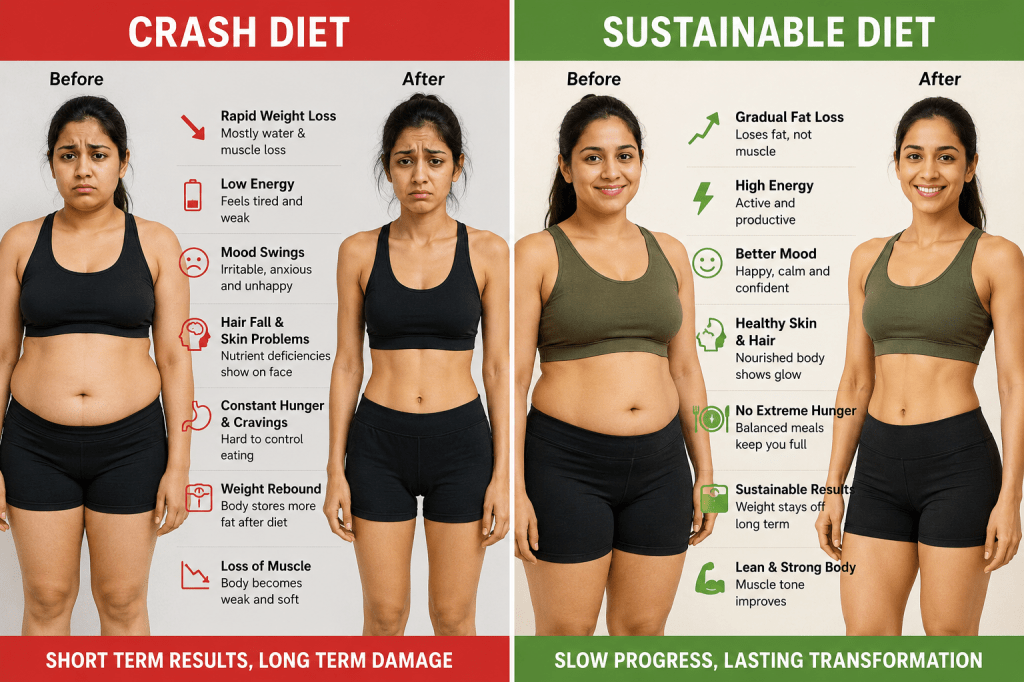
What Is Sustainable Weight Loss?
Sustainable weight loss is a gradual, realistic, and healthy approach to reducing body weight while maintaining overall wellness.
It focuses on:
- Balanced eating habits
- Consistent physical activity
- Lifestyle improvement
- Better sleep and stress management
- Long-term habit formation
Instead of aiming for dramatic results within days, sustainable weight loss encourages slow and steady progress that can be maintained for years.
A healthy and sustainable rate of weight loss is generally 0.5 to 1 kg per week. This pace helps preserve muscle mass, maintain metabolism, and reduce the chances of regaining weight.
Why Crash Diets Seem to Work Initially
Many people lose weight quickly during crash diets. However, most of the initial weight loss comes from:
- Water loss
- Glycogen depletion
- Muscle breakdown
When calorie intake drops drastically, the body uses stored carbohydrates for energy. Since carbohydrates store water, rapid water loss occurs, making the scale number drop quickly.
But this is not true fat loss.
Once normal eating resumes, the body regains water weight and often stores additional fat as a protective mechanism.
Major Problems With Crash Dieting
Slower Metabolism : When you drastically reduce calories, your body enters “survival mode.” It tries to conserve energy by slowing metabolism
This means:
- Fewer calories burned
- Lower energy levels
- Difficulty losing weight later
Repeated crash dieting can permanently affect metabolic efficiency.
Muscle Loss Instead of Fat Loss : Without adequate nutrition and protein intake, the body starts breaking down muscle tissue for energy.
Loss of muscle leads to:
- Weakness
- Poor body composition
- Reduced strength
- Slower calorie burning
Muscle is metabolically active tissue. Losing muscle makes future weight management harder.
Nutritional Deficiencies : Crash diets often lack essential nutrients such as:
- Protein
- Iron
- Vitamin B12
- Calcium
- Magnesium
- Healthy fats
This may cause:
- Hair fall
- Weak immunity
- Fatigue
- Mood swings
- Poor concentration
- Hormonal imbalance
Long-term deficiencies can seriously impact overall health.
Increased Cravings and Binge Eating : Extreme food restriction creates intense cravings. Eventually, many people overeat or binge because the body tries to compensate for deprivation.
This creates a harmful cycle:
Crash Diet → Cravings → Overeating → Guilt → Another Crash Diet
Over time, this can damage your relationship with food.
Mental and Emotional Stress : Crash dieting often leads to:
- Obsession with calories
- Fear of eating
- Anxiety around food
- Social isolation
- Frustration from regaining weight
Sustainable health includes mental wellness, not just physical appearance.
Benefits of Sustainable Weight Loss
Long-Term Results
Healthy habits are easier to maintain than extreme restrictions.
Sustainable weight loss helps:
- Prevent weight regain
- Improve body composition
- Create lifelong healthy routines
The goal is not temporary transformation but permanent lifestyle improvement.
Better Metabolic Health
Balanced eating and regular exercise support:
- Stable metabolism
- Healthy blood sugar
- Hormonal balance
- Improved digestion
This is especially important for people with:
- Diabetes
- PCOS
- Thyroid imbalance
- Menopause-related weight gain
Improved Energy Levels
Unlike crash diets that leave you exhausted, sustainable nutrition fuels the body properly.
You experience:
- Better workout performance
- Improved focus
- More daily energy
- Better sleep quality
Preservation of Muscle Mass
A healthy weight loss plan combines:
- Protein-rich nutrition
- Strength training
- Moderate calorie deficit
This helps the body lose fat while maintaining lean muscle.
Strength training plays a major role in sustainable fat loss because muscle supports higher calorie burning even at rest.
Better Relationship With Food
Sustainable dieting teaches balance instead of restriction.
You learn:
- Portion control
- Mindful eating
- Healthy flexibility
- Consistency over perfection
This reduces guilt and emotional eating.
The Science Behind Sustainable Fat Loss
Healthy fat loss happens when the body maintains a moderate calorie deficit over time.
The basic concept is: Calories Burned > Calories Consumed
However, the deficit should not be extreme.
Very low-calorie diets can increase stress hormones like cortisol, affecting:
- Fat storage
- Sleep
- Mood
- Hunger levels
A moderate calorie deficit combined with strength training and adequate protein is far more effective for long-term fat reduction.
Signs Your Weight Loss Method Is Sustainable
Your approach is likely sustainable if:
- You feel energetic most days
- You are not starving constantly
- You can enjoy social occasions
- You are sleeping well
- You are becoming stronger physically
- Your mood remains stable
- You can imagine following the plan long-term
If your diet feels miserable, exhausting, or impossible to maintain, it probably is not sustainable.


It was good read. Keep it up
LikeLike
Thank you
LikeLiked by 1 person